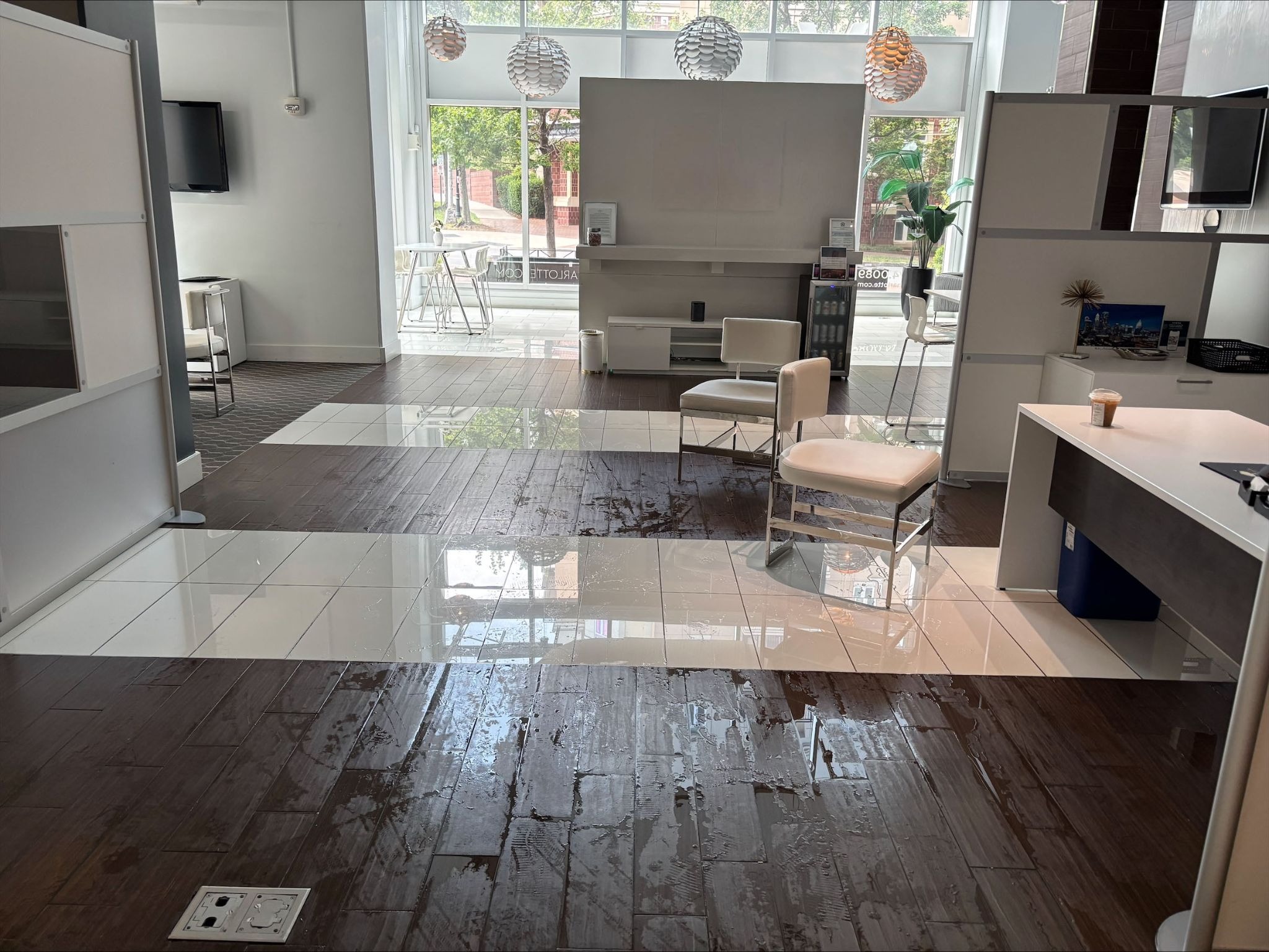
When a commercial sprinkler system activates overnight.
When a pipe bursts in a medical office.
When a fire department clears a retail space.
When a homeowner walks into a flooded kitchen at 6 a.m.
The first question is always the same:
What do we do right now?
Emergency restoration is not just cleanup; it is stabilization. What happens in the first 24 hours after water or fire damage will determine how much of the property can be saved, how long operations are disrupted, and how smooth the restoration process will be.
At Spangler Restoration, emergency restoration services across Charlotte, Raleigh, Greensboro, Western NC, and throughout North Carolina include:
- Emergency water damage restoration
- Fire and smoke damage restoration
- Storm and wind mitigation
- Mold remediation
- Trauma and biohazard cleanup
Whether you manage a commercial facility or own a home, the first hours matter most.
This guide outlines the first steps after water or fire loss, explains what requires professional intervention, and provides an actionable emergency restoration checklist you can keep on file before a loss occurs.
Table of Contents
Why The First 24 Hours Matter After Water or Fire Damage
Water Damage Escalates Quickly
Water does not stay contained. It travels through drywall, beneath flooring systems, into insulation, and into structural framing. In commercial buildings, it can migrate between units, floors, or tenant spaces. Within 24 to 48 hours, microbial growth becomes a real concern depending on conditions.
For commercial properties, delay often means:
- Expanded demolition
- Extended business interruption
- Tenant disruption
- Higher reconstruction costs
For homeowners, delay increases the likelihood of mold growth and hidden structural damage. Professional emergency water damage restoration is designed to stop that progression immediately.
Fire Damage Continues After the Flames Are Out
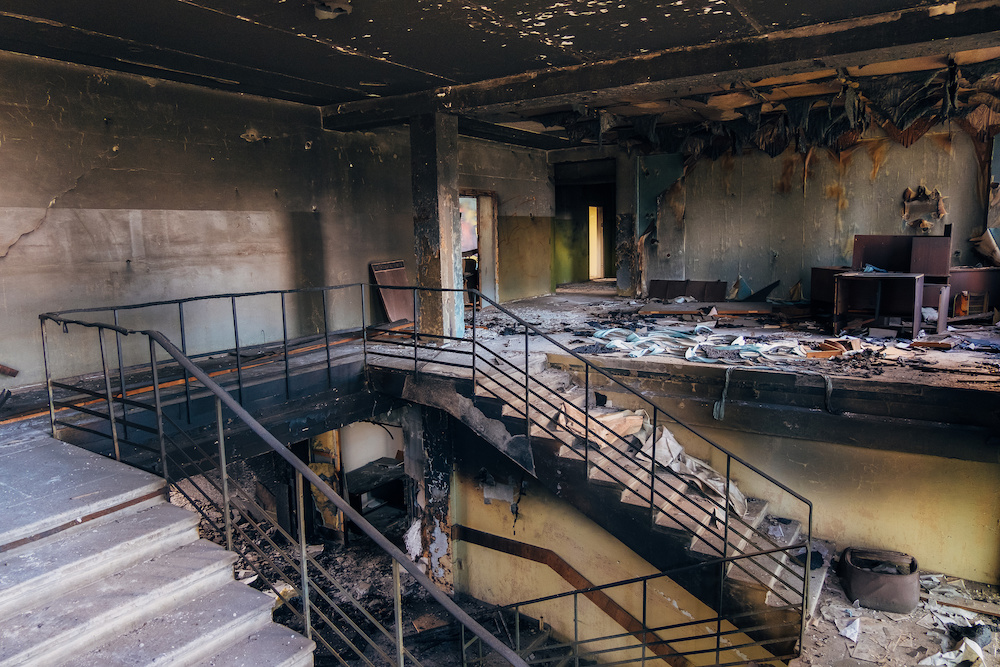
Once a fire is extinguished, damage continues. Smoke residue is acidic. It begins corroding metals, electronics, and HVAC components immediately. Soot can permanently stain materials if not addressed correctly and quickly.
The first 24 hours are focused on stabilization: preventing corrosion, odor absorption, and further deterioration.
Insurance and Risk Management Considerations
Insurance carriers expect policyholders to take reasonable steps to prevent further damage.
For commercial property managers and risk managers, documentation is critical. Adjusters rely on:
- Moisture readings
- Thermal imaging
- Photographic documentation
- Clear mitigation timelines
A qualified emergency restoration services provider documents everything from day one, protecting both the property and the claim.
Emergency Restoration Checklist: Immediate Steps to Take
If you are dealing with water or fire damage right now, focus on the following.
1. Confirm the Property Is Safe to Enter
Safety is the first priority.
After a fire, wait for official clearance before re-entry.
If water is present:
- Avoid standing water near electrical systems
- Do not use appliances in affected areas
- Shut off power at the breaker only if safe
Structural damage is not always visible. If there is any uncertainty, wait for professional evaluation.
2. Stop the Source of Damage
If a pipe is actively leaking, shut off the main water supply.
If fire or gas is involved, ensure gas lines are secure.
Stopping the source quickly can significantly reduce overall damage, but if you are unsure how to safely shut down utilities, do not attempt it.
3. Contact Emergency Restoration Professionals Immediately
Time is the most important variable in mitigation.
Emergency restoration services require:
- Commercial-grade water extraction equipment
- Drying protocol plans based on IICRC standards
- Certified technicians
- Daily moisture monitoring
- Proper soot stabilization procedures
Household fans, dehumidifiers, or surface cleaning methods are not substitutes for professional mitigation. Improper drying or cleaning often leads to mold growth, odor issues, and claim complications.
Spangler Restoration provides 24/7 emergency restoration services across North Carolina, with rapid response teams positioned throughout the state.
4. Notify Your Insurance Carrier
Report the loss immediately and obtain a claim number.
Be prepared to provide:
- Date and time of incident
- General cause of loss
- Initial mitigation steps
Prompt reporting protects your position and keeps the claims process moving.
5. Document the Damage Thoroughly
Before materials are removed, if safe, document:
- Wide views of affected rooms
- Close-ups of water lines or soot
- Damaged equipment and contents
- Structural impact
Do not discard materials without documentation.
Professional restoration teams will also conduct moisture mapping and create detailed documentation aligned with insurance requirements.
6. Take Limited Steps to Prevent Further Damage
If safe:
- Move unaffected items away from wet areas
- Place barriers to slow water migration
- Cover broken windows or roof openings
Avoid demolition or aggressive drying efforts without professional guidance. Improper action can increase damage and complicate coverage.
What Happens In the First 24 Hours of Professional Restoration
Initial Assessment and Damage Evaluation
Upon arrival, certified technicians evaluate:
- Structural stability
- Water contamination category
- Smoke penetration
- HVAC exposure
- Hidden moisture behind walls and flooring
This assessment uses professionally calibrated moisture meters and thermal imaging, not visual estimation alone.
Controlled Drying and Mitigation based on IICRC standards (Water Loss)
Emergency water damage restoration follows established IICRC industry standards.
The process typically includes:
- Inspection & Assessment: Category of water
- Safety & PPE: Power, Mechanical systems, & PPE
- Moisture Mapping & Documentation
- Immediate water extraction
- Mitigation Strategy (Dry & Clean): Strategic placement of air movers and dehumidifiers
- Containment when necessary
- Demolition when necessary
- Cleaning & Sanitization
- Daily moisture monitoring
- Adjustments to drying strategy as conditions change
The objective is to return materials to pre-loss moisture levels whenever possible, minimizing demolition.
Incomplete drying is one of the most common causes of post-loss mold growth.
Smoke and Soot Stabilization (Fire Loss)
Fire residue varies depending on materials burned.
Certified technicians determine:
- Confirm structure is safe to enter (fire department clearance)
- Inspection & Assessment: Type of fire
- Stabilization (Immediate Priority): Board-up / tarp, Control airflow, Disable HVAC systems, air scrubbers (HEPA filtration), containment zones, & odor control.
- Soot & Residue Identification
- Identifying materials affected by smoke molecules for replacement
- Dry Cleaning: Hepa vac, Dry chem sponge & remove loose soot.
- Demolition (When Necessary): Heavily charred or structurally compromised, porous, and non-restorable (insulation, some drywall, carpet)
- Wet Cleaning / Chemical Cleaning: Detergents / degreasers, Solvent-based cleaners (for oily soot), Alkaline cleaners (common for fire residues); Match method to: Surface type (painted, wood, metal), & Soot type
- Deodorization: Thermal fogging, ULV fogging, Hydroxyl generators, Ozone, & Sealing (encapsulation) depending on what you are treating: air, surfaces, and/or porous materials.
- HVAC System Cleaning, contents cleaning, and final cleaning & verification are all critical in the final steps.
Early stabilization protects materials that can be restored and prevents long-term corrosion and odor penetration.
Mitigation vs. Full Reconstruction
The first 24 hours focus strictly on mitigation, stopping damage from spreading.
Reconstruction may follow and can include:
- Drywall replacement
- Flooring installation
- Cabinetry rebuild
- Electrical and HVAC repair
Working with a full-service restoration provider prevents delays between mitigation and rebuild.
Frequently Asked Questions About Emergency Restoration
What should I do in the first 24 hours after water damage?
Ensure the property is safe, stop the water source if possible, contact professional emergency restoration services immediately, notify your insurance carrier, and document the damage before cleanup begins.
How quickly should emergency restoration services respond?
Emergency restoration services should respond within hours. Rapid response reduces structural damage, limits mold growth, and improves insurance claim outcomes.
Can I handle water damage cleanup myself?
Surface drying is not enough. Professional emergency water damage restoration uses commercial equipment and moisture monitoring to ensure hidden water is properly removed and mold risk is minimized.
How long does emergency restoration take?
Mitigation may begin within hours of the loss. The drying phase for water damage typically lasts several days depending on severity. Full reconstruction timelines vary based on the extent of damage.
Does emergency restoration help with insurance claims?
Yes. A professional restoration company documents moisture readings, damage scope, and mitigation activities as part of the restoration process. This documentation is shared with the property owner and their insurance carrier for review.
Why The Right Emergency Restoration Partner Matters
In a competitive market, experience, equipment, and documentation standards separate providers.
Commercial facilities require minimized downtime and structured communication.
Insurance adjusters require precise documentation.
Homeowners require clarity and reassurance.
Spangler Restoration has served communities across Charlotte, Raleigh, Greensboro, Boone, and throughout North Carolina for decades.
Our certified technicians and licensed contractors manage:
- Emergency mitigation
- Loss documentation
- Full reconstruction
Turnkey under one roof.
We restore structures. More importantly, we restore stability when it matters most.
Final Thoughts
Water and fire losses are disruptive. The response should not be. The first 24 hours determine how much of your property can be preserved and how smoothly the restoration process will unfold.
Prioritize safety. Act quickly. Work with trained professionals.
Contact Spangler Restoration for immediate emergency restoration services anywhere in North Carolina. We are ready to respond, day or night.
You Might Also Like
Summer Storm Damage in Charlotte: What to Do After a Thunderstorm
Trauma and Biohazard Cleanup Regulations: What Every Property Manager and Restoration Partner Should Know