Severe weather moves fast across the Carolinas.
A line of storms that builds over the Piedmont in the afternoon can leave a commercial property with standing water, damaged roofing, compromised windows, and debris-covered parking lots by evening.
For property managers and facility directors, the window between storm clearance and the start of professional cleanup is narrow, and the decisions made in those first hours carry real consequences.
This guide walks through what commercial property managers need to know after a Carolina storm, which areas to prioritize, which risks to avoid, and how to choose a cleanup partner who is prepared to work at the scale and pace a commercial property demands.
Table of Contents
Why Storm Damage Cleanup Matters for Commercial Properties
Not all storm damage looks the same. In the Charlotte region and across the Carolinas, severe weather events can bring a combination of high winds, hail, flash flooding, falling trees, and storm surge from named storms tracking inland. Each of those forces creates its own type of damage, and for a commercial property, the layers tend to compound quickly.
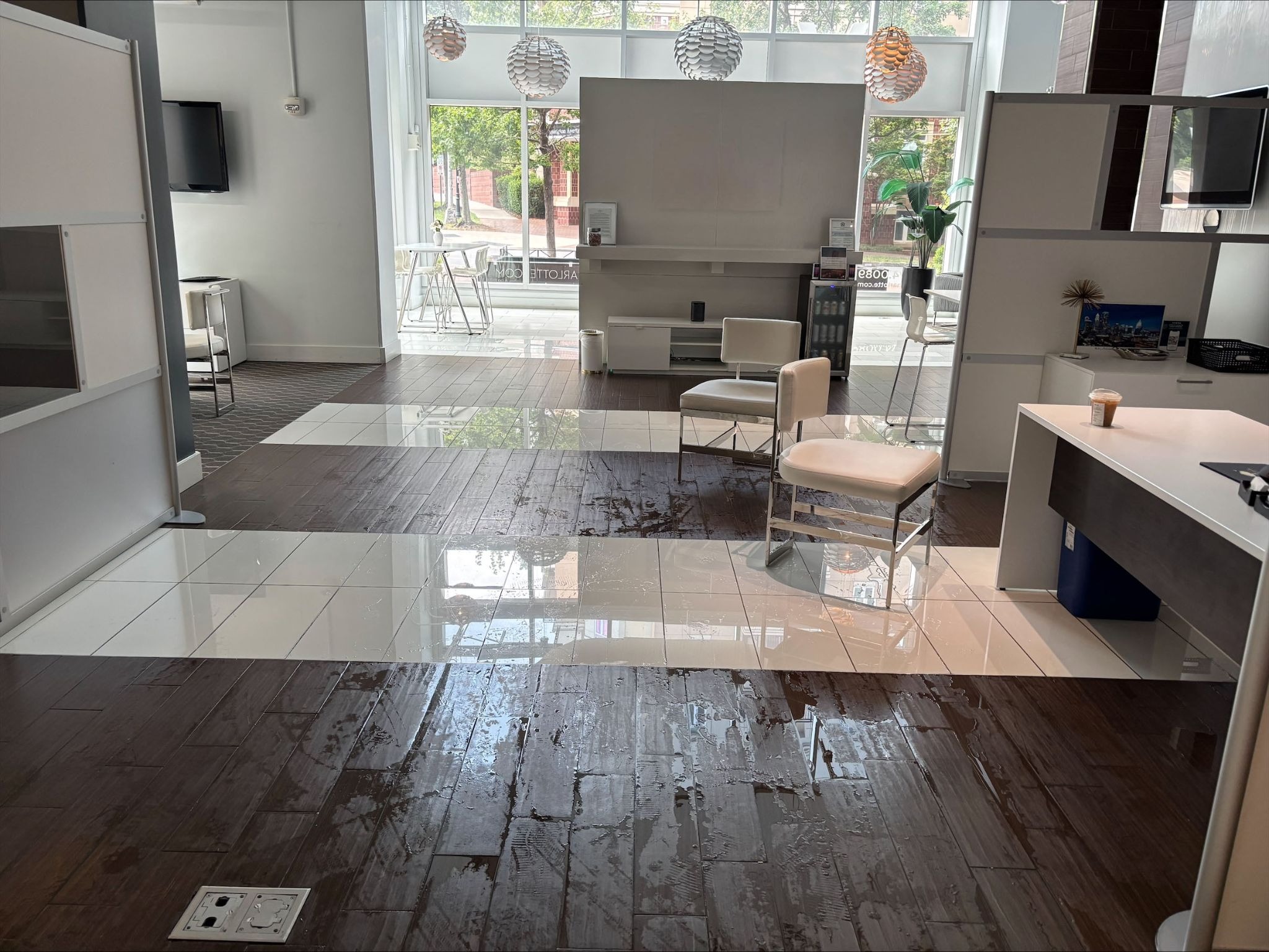
Roof failures allow water into insulation, ceiling systems, mechanical, and interior spaces. High winds strip coping and flashing and expose structural edges. Flooding pushes through ground-floor entries, utility areas, and parking structures. When multiple systems are affected at once, the scope of cleanup grows larger with every hour that passes.
Beyond the physical damage, there are operational and liability dimensions that residential losses simply do not share. Tenants expect communication and rapid action. Business continuity for your commercial occupants may depend on how quickly common areas, utilities, and access points are restored. Delayed cleanup can expose a property manager to liability claims if hazardous conditions persist after a storm, and insurance carriers expect policy holders to take reasonable and prompt mitigation steps.
The property managers who recover fastest are the ones who already know what comes next before the storm arrives.
Key Areas of Focus for Effective Storm Damage Cleanup
1. Immediate Safety and Damage Assessment
The first task after a storm is not cleanup. It is a thorough, careful walkthrough of the property to identify immediate hazards before any work begins.
Look for downed or compromised utility lines, standing water near electrical systems, structural concerns such as shifted roof sections or leaning facades, gas line exposure, and debris that may have shifted or struck building systems. Do not assume that a building that looks intact from the outside is safe to enter at every point.
Document everything as you go. Photograph damage to roofing, exterior walls, windows, mechanical areas, and any tenant-occupied spaces. Note timestamps on all photos. This documentation becomes the foundation of the insurance claim and the restoration scope, so accuracy and thoroughness matter at this stage.
Engaging a professional restoration team early in the process also means that documentation, moisture mapping, and structural assessment begin immediately rather than after several hours or days of waiting. Spangler Restoration can have certified technicians in storm damage restoration on-site within the time agreed upon, prepared to assess, document, and mobilize.
2. Water Extraction and Structural Drying
Water intrusion is the most urgent physical threat after most Carolina storms. Whether it enters through a compromised roof, a failed exterior wall system, or ground-level flooding, water travels quickly through commercial building assemblies. It moves into wall cavities, beneath flooring systems, into insulation, and through shared assemblies between floors or tenant spaces.
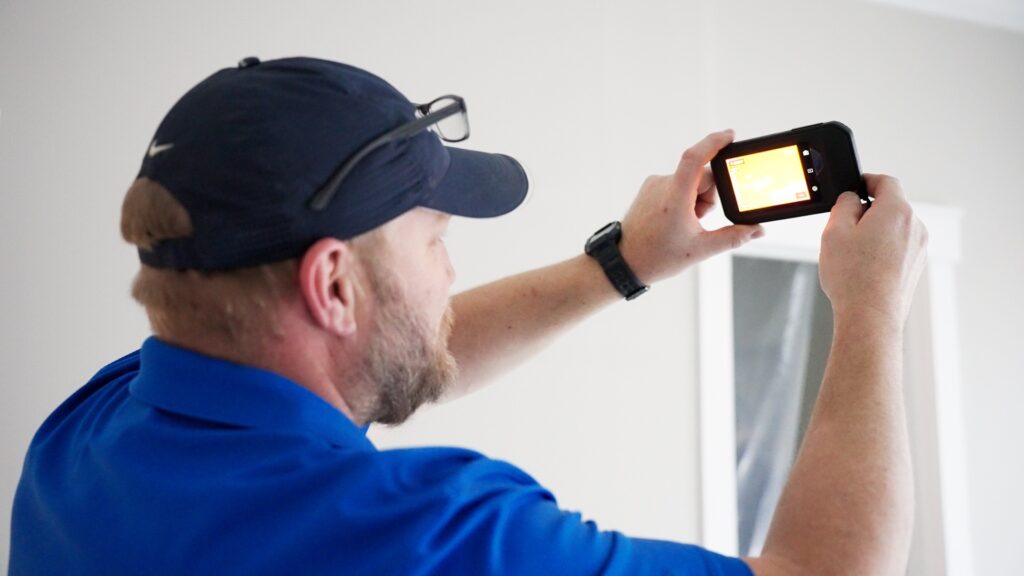
According to the IICRC and the EPA, mold growth can begin on wet, porous building materials within 24 to 48 hours under the right conditions. Commercial buildings are particularly vulnerable because their larger floor plates and more complex assemblies can retain moisture in areas that are difficult to detect without calibrated moisture meters and thermal imaging.
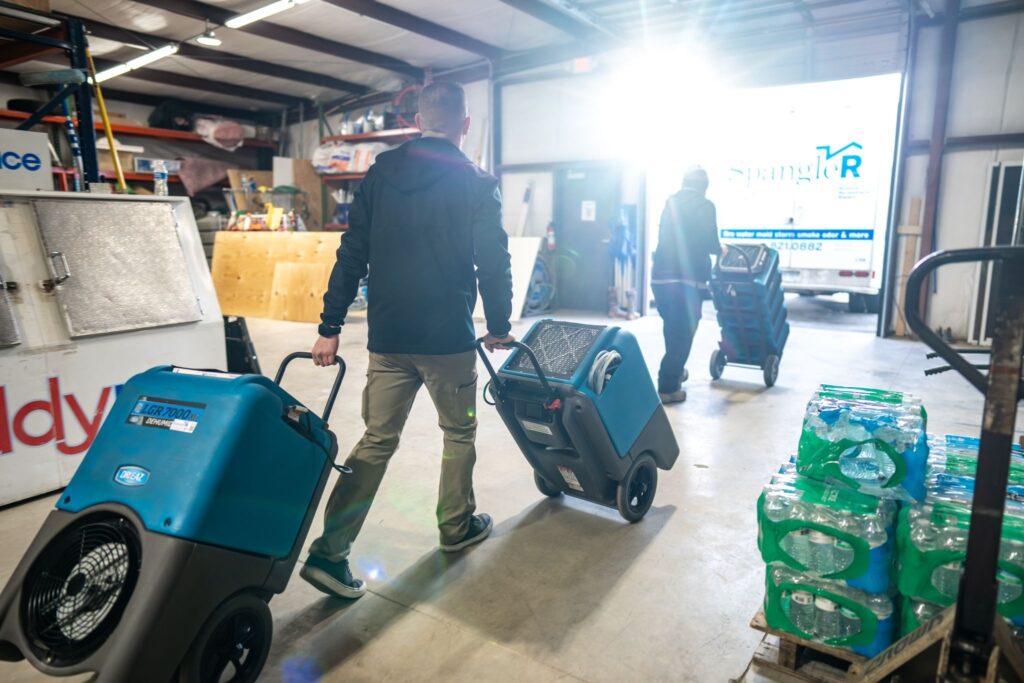
Professional water damage restoration and structural drying using IICRC-established protocols are designed to address what surface observation cannot. Moisture mapping identifies hidden saturation points. Strategic placement of commercial-grade air movers and dehumidifiers supports controlled drying. Daily moisture monitoring confirms that materials are reaching pre-loss levels and that no new pockets of saturation are developing.
Shortcuts here tend to be expensive ones. Incomplete drying is one of the most common causes of post-loss mold growth in commercial properties, and remediating an established mold remediation costs significantly more than preventing one.
3. Structural Repairs and Debris Removal
Once safety is confirmed and water mitigation is underway, structural repairs and exterior debris removal become the next priority.
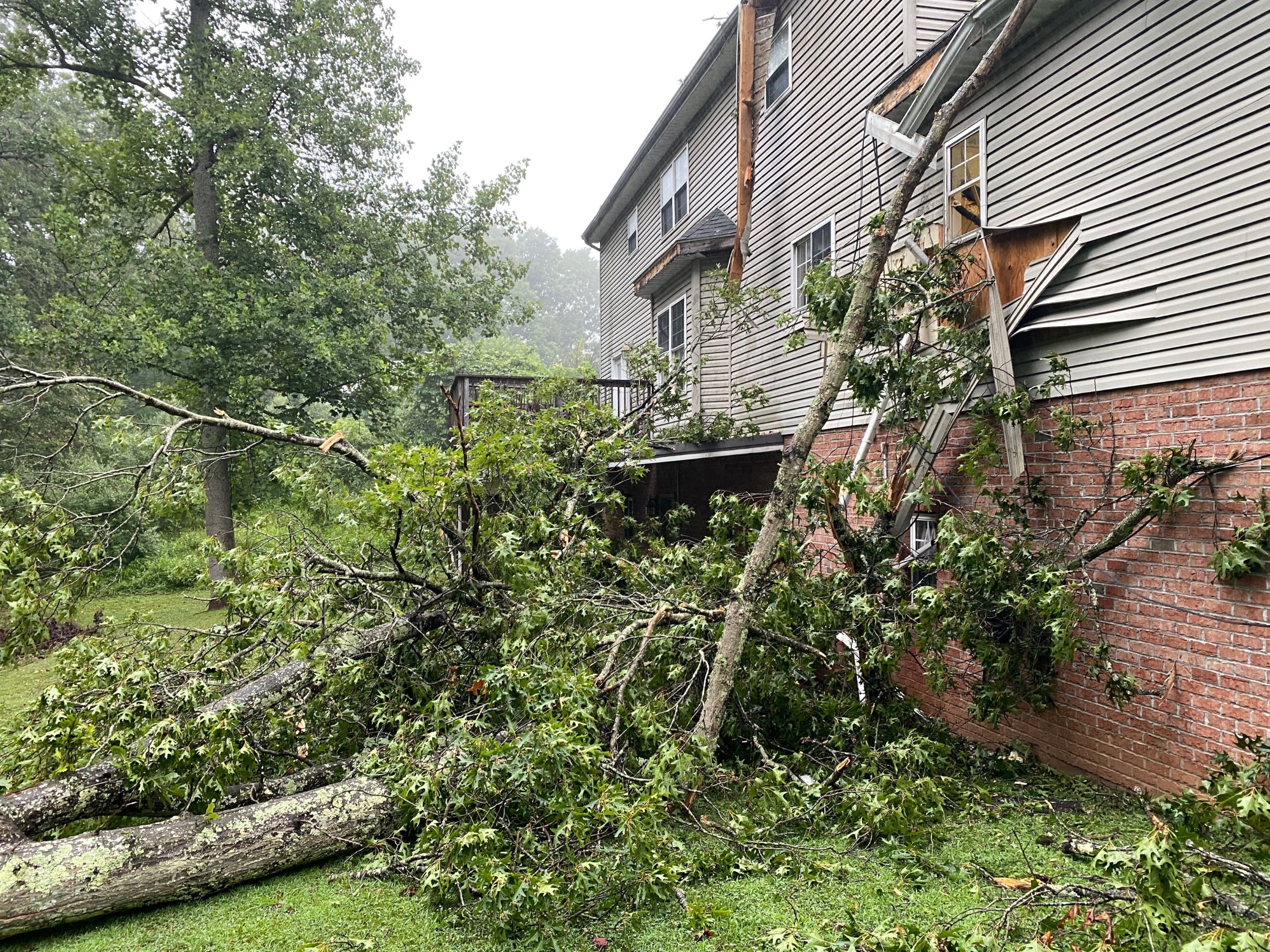
Storm debris around a commercial property creates liability exposure and signals to tenants and the public that the property is not being actively managed. Fallen branches, displaced materials, and wind-scattered objects should be removed and the site secured promptly.
Structural repairs after a storm can range from temporary measures, such as board-up, tarping, and roof covering, to permanent repairs that require a licensed general contractor. Spangler Restoration holds an NC/SC Licensed General Contractor status with Unlimited Status, which means mitigation and structural repair can be managed under one provider rather than split across multiple vendors with separate timelines and communication chains.
Working with a full-service restoration partner experienced in commercial and industrial restoration services reduces the coordination burden on property managers and eliminates the gaps that can develop between a mitigation contractor and a separate rebuild contractor.
4. Mold Prevention and Indoor Air Quality
The Carolina climate adds a layer of complexity to storm recovery that property managers in drier regions do not face to the same degree. High ambient humidity, warm temperatures, and the moisture that enters a building during a storm event create conditions where mold can establish quickly in affected materials.
Mold prevention after a storm is not passive. It requires active management of humidity levels, prompt removal or drying of wet materials, containment where necessary, and monitoring of indoor air quality in affected areas.
For occupied commercial properties, this is also a tenant communication and legal exposure concern. Mold in an occupied building is a health issue, a relationship issue, and potentially a litigation issue. Getting ahead of it through proper mold prevention protocols from the start is substantially less costly and disruptive than addressing a remediation situation after the fact.
Professional restoration teams with IICRC-trained staff apply mold prevention protocols as part of the water mitigation process, not as a separate engagement after mold is already visible.
5. Coordinating Documentation for Insurance
Storm losses on commercial properties involve multiple parties: the property owner, the insurance carrier, the adjuster, and the restoration provider. The documentation that the restoration team generates in the field is what allows that process to move efficiently.
Spangler Restoration documents moisture readings, damage scope, mitigation activities, and job progress throughout the restoration process. This documentation is shared with the property owner and their insurance carrier for review. Restoration teams can also meet on-site with adjusters to explain the scope of work and the methods being used.
What restoration providers cannot do in North Carolina and South Carolina is represent a policy holder in the claims process, negotiate a settlement, or act in the capacity of a public adjuster or attorney. That boundary is important to understand. What a qualified restoration partner can do is provide thorough, accurate, insurance-ready documentation that supports the adjuster’s review and keeps the process moving without unnecessary delays.
Smart Questions to Ask Your Storm Cleanup Partner
Before a storm season arrives, property managers should be evaluating restoration partners rather than searching for one in the aftermath of a loss. These questions can help identify whether a provider is genuinely equipped for commercial work.
- Are you set up to handle large commercial properties? Commercial losses have different scales, complexity, and communication requirements than residential jobs. A provider that primarily handles residential work may not have the equipment inventory, internal staff size, or project management systems that a commercial property requires.
- How quickly can your team mobilize after a storm event? Understand specifically what response time commitments look like and what factors may affect them, particularly during regional storm events when demand is high across multiple properties simultaneously.
- What safety and compliance protocols do you follow? Certified providers follow IICRC standards for water damage restoration, mold remediation, and related disciplines. In Healthcare facilities the partner should have CICTI healthcare manager certifications. Ask about technician certifications, safety procedures for occupied buildings, and how they handle Category 2 or Category 3 water situations.
- How do you document work for insurance adjusters? Ask for specifics. Moisture logs, thermal imaging, photographic documentation, and written scope reports are the baseline. Understand how they communicate with your team and whether they have experience presenting scope to commercial adjusters.
- Can you provide references from commercial property managers in the region? A restoration company with a meaningful track record in commercial work should be able to connect you with property managers who can speak to the experience firsthand.
Why Choosing the Right Cleanup Partner Makes a Difference
The difference between a well-managed storm recovery and a drawn-out, disruptive one often comes down to the restoration partner involved.
A qualified commercial restoration partner reduces tenant-facing disruption by working efficiently and communicating clearly at every stage. Certified technicians identify risks, including mold exposure, hidden moisture, and structural vulnerabilities, before they become larger problems. Faster, more complete mitigation translates directly to shorter rebuild timelines and reduced business interruption for commercial occupants.
It also reflects on the property. A commercial property that is restored professionally and promptly sends a clear signal to tenants about how the asset is managed. That matters for business disruption, tenant retention, and the long-term value of the property.
Spangler Restoration has served commercial, multifamily, and residential property owners across Charlotte, Raleigh, Greensboro, Boone, and the broader Carolinas for years. IICRC-trained technicians, an NC/SC Licensed General Contractor with Unlimited Status, and turnkey support from mitigation through repairs give commercial property managers a single, accountable partner from the first call through project close.
Because trust matters. Especially after a storm.
Bringing it all together
A Carolina storm does not wait for a convenient time, and neither should the response. For commercial property managers, prompt and professional storm damage cleanup is not just a repair decision. It is a risk management decision, a tenant relations decision, and a long-term asset protection decision.
The property owners/managers who navigate storm losses most effectively are the ones who have already identified their restoration partner, understand the process, and know who to call the moment conditions are safe.
Do not wait for the next storm to start that conversation. Contact Spangler Restoration to discuss your emergency readiness plan and make sure your properties are covered before severe weather arrives.
You Might Also Like
Summer Storm Damage in Charlotte: What to Do After a Thunderstorm
Trauma and Biohazard Cleanup Regulations: What Every Property Manager and Restoration Partner Should Know