Charlotte summers bring more than heat and humidity. They bring fast-building afternoon thunderstorms that can go from a distant rumble to hail, high wind, and flooded streets in less than thirty minutes.
For homeowners and business owners across the Charlotte area, that speed is exactly what makes summer storms so disruptive. A roof that was fine at lunchtime can be leaking by dinner. A parking lot that was dry can be under two inches of water before the workday ends.
This guide walks through what to do in the hours right after a thunderstorm passes, the most common types of damage Charlotte properties see each summer, and when it makes sense to bring in a professional team for storm damage repair in Charlotte, NC.
Table of Contents
Why Charlotte Summer Thunderstorms Cause Fast-Moving Damage
Charlotte sits in a part of the Piedmont where heat, humidity, and shifting air masses combine to build storms quickly, especially from June through August. These storms often develop and intensify within a single afternoon, giving property owners far less advance warning than a tracked hurricane or a winter storm system usually allows.
That speed changes how damage happens. Instead of one steady threat, a single thunderstorm can bring straight-line winds, hail, heavy rain, and lightning within the same 20 to 30-minute window. Roofs, siding, windows, and drainage systems can all be affected at once, and storm damage is not always immediately visible from the street, even as water works its way into the attic or a wall cavity. For commercial property managers and facility teams, that hidden damage can also affect tenant spaces, building systems, access areas, and business continuity, making early assessment especially important after a severe storm.
For property owners, the practical takeaway is that the response window matters as much as the storm itself. What happens in the first few hours after the rain stops can determine whether you are looking at a straightforward repair or a larger mold and structural issue a few weeks later.
The First Steps to Take After the Storm Passes
Before any cleanup begins, take time to check the property for hazards. Look for downed power lines, standing water near outlets or electrical panels, and any part of the roof or exterior wall that looks shifted, sagging, or unstable. If anything seems unsafe, stay clear of it and wait for a professional to assess it rather than getting a closer look yourself.
Once the property is safe to walk, document what you see. Photograph roof damage, broken windows, water intrusion, and any debris that struck the building or vehicles. Note the date and time on each photo. This record becomes the starting point for both the insurance claim and the restoration scope, so it is worth doing thoroughly rather than quickly.
From there, take only limited steps to prevent further damage. Covering a broken window or a small roof opening with a tarp is reasonable if it can be done safely. Cutting into wet drywall or attempting major repairs without guidance can complicate the restoration process and the insurance review, so structural decisions are best left to a licensed professional.
Common Types of Storm Damage in Charlotte Homes and Businesses
Summer thunderstorms in the Charlotte area tend to cause a fairly consistent set of problems, even though every storm is a little different.
High winds and hail are among the most common culprits. Wind can lift shingles, strip flashing, and push rain sideways into areas that are normally protected. Hail, even when it is not large, can crack roofing materials and create small openings that are easy to miss during a quick walkthrough.
Flash flooding is another frequent issue, especially for properties with below-grade entries, parking areas, or older drainage systems. A short but intense downpour can overwhelm storm drains faster than a longer, steadier rain event.
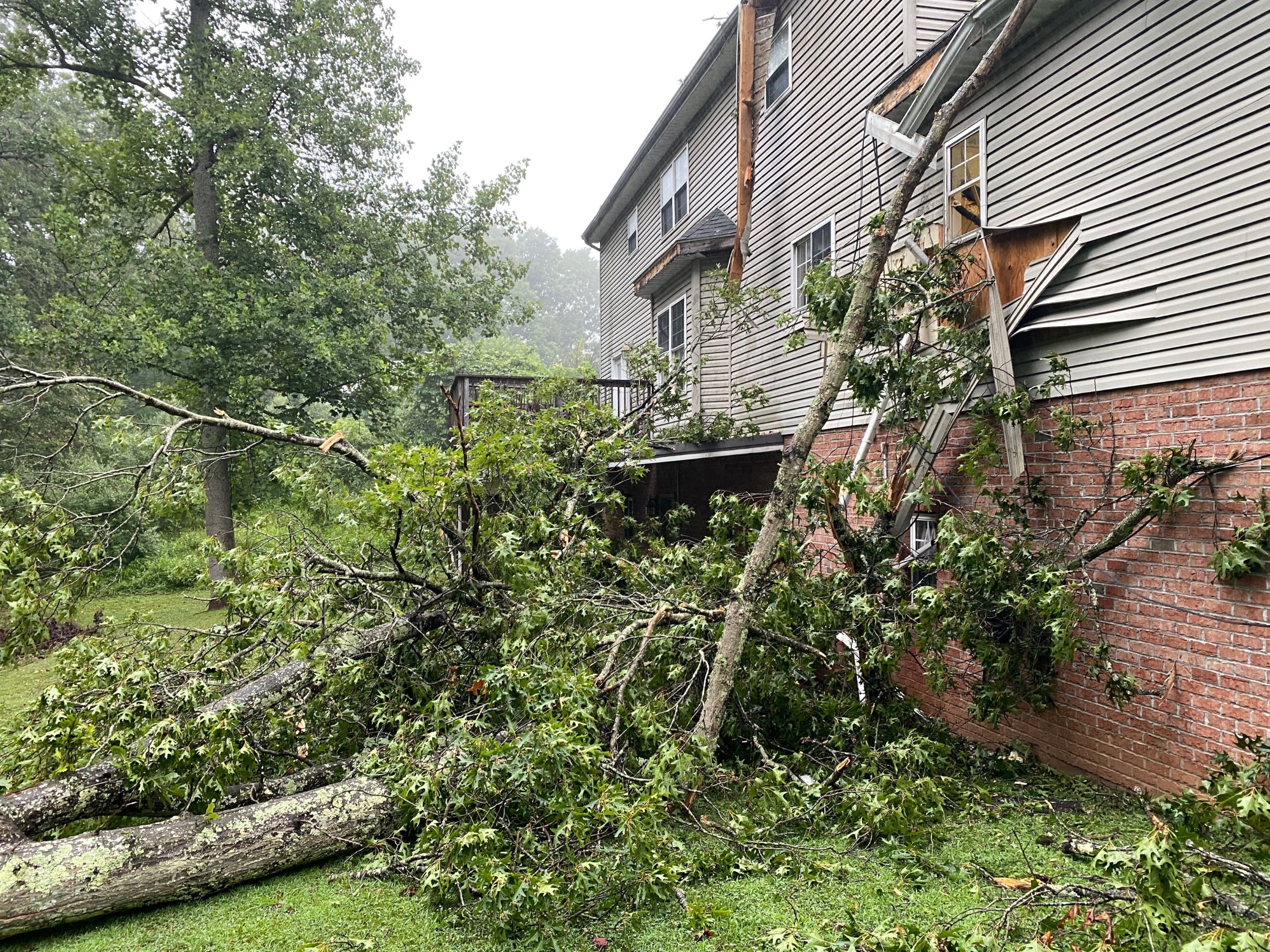
Fallen limbs and trees create their own category of damage, from punctured roofing to blocked entries and damaged fencing.
Lightning strikes, while less frequent, can create fire risk or damage electrical systems even without a visible fire.
Each of these events can also lead to water intrusion, which is often the type of damage that carries the highest long-term cost if it is not addressed quickly.
Why Fast Water Extraction and Drying Matter in Carolina Humidity
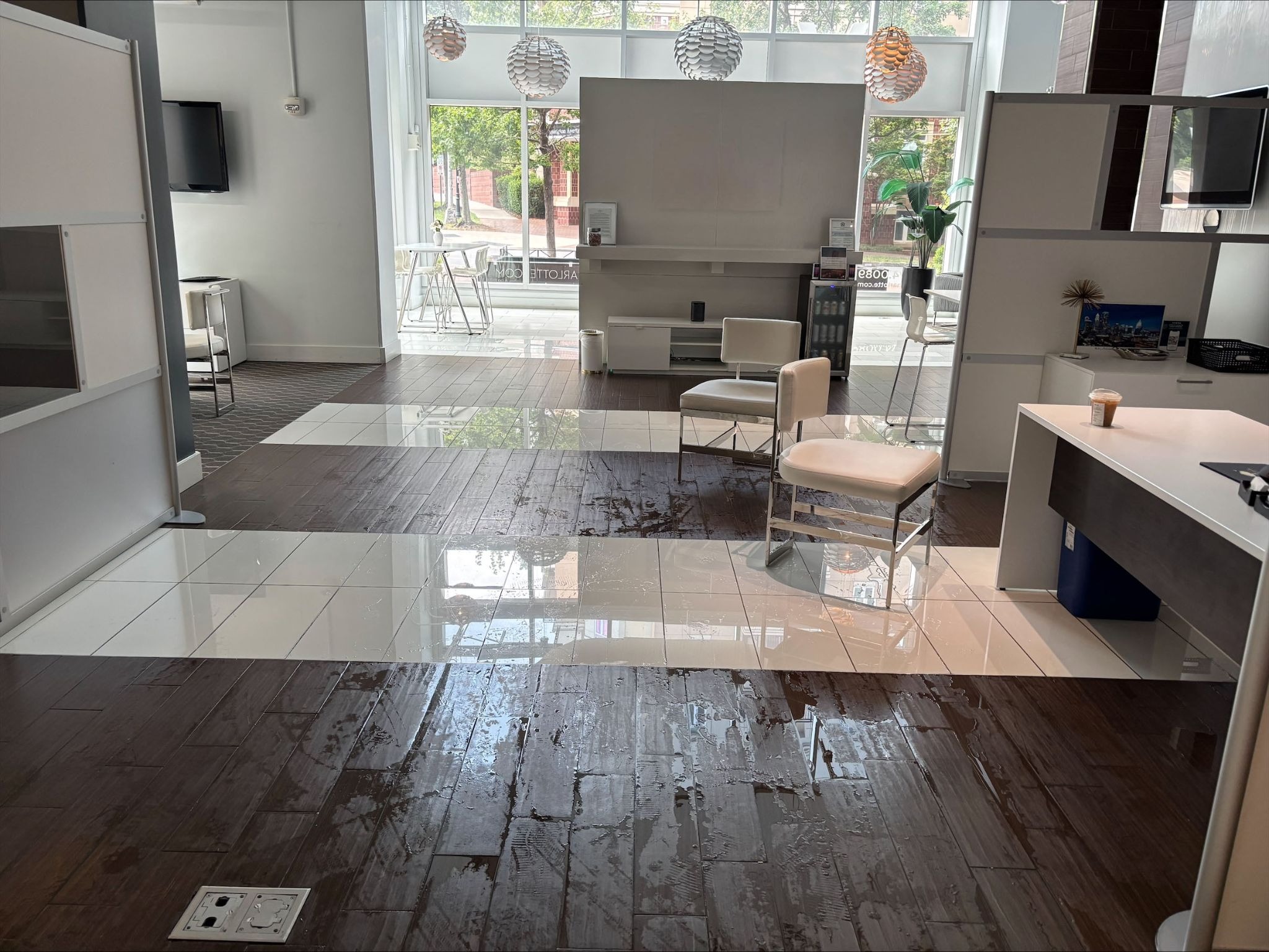
Water that enters a building during a storm does not stay in one place. It moves into insulation, subflooring, drywall, and wall cavities, often faster than it is visible from the surface.
The Carolina climate makes this more urgent. Warm temperatures and high humidity, especially in the summer months, create favorable conditions for mold growth on wet materials. Guidance from the IICRC and the EPA notes that mold can begin developing on porous, wet building materials within 24 to 48 hours.
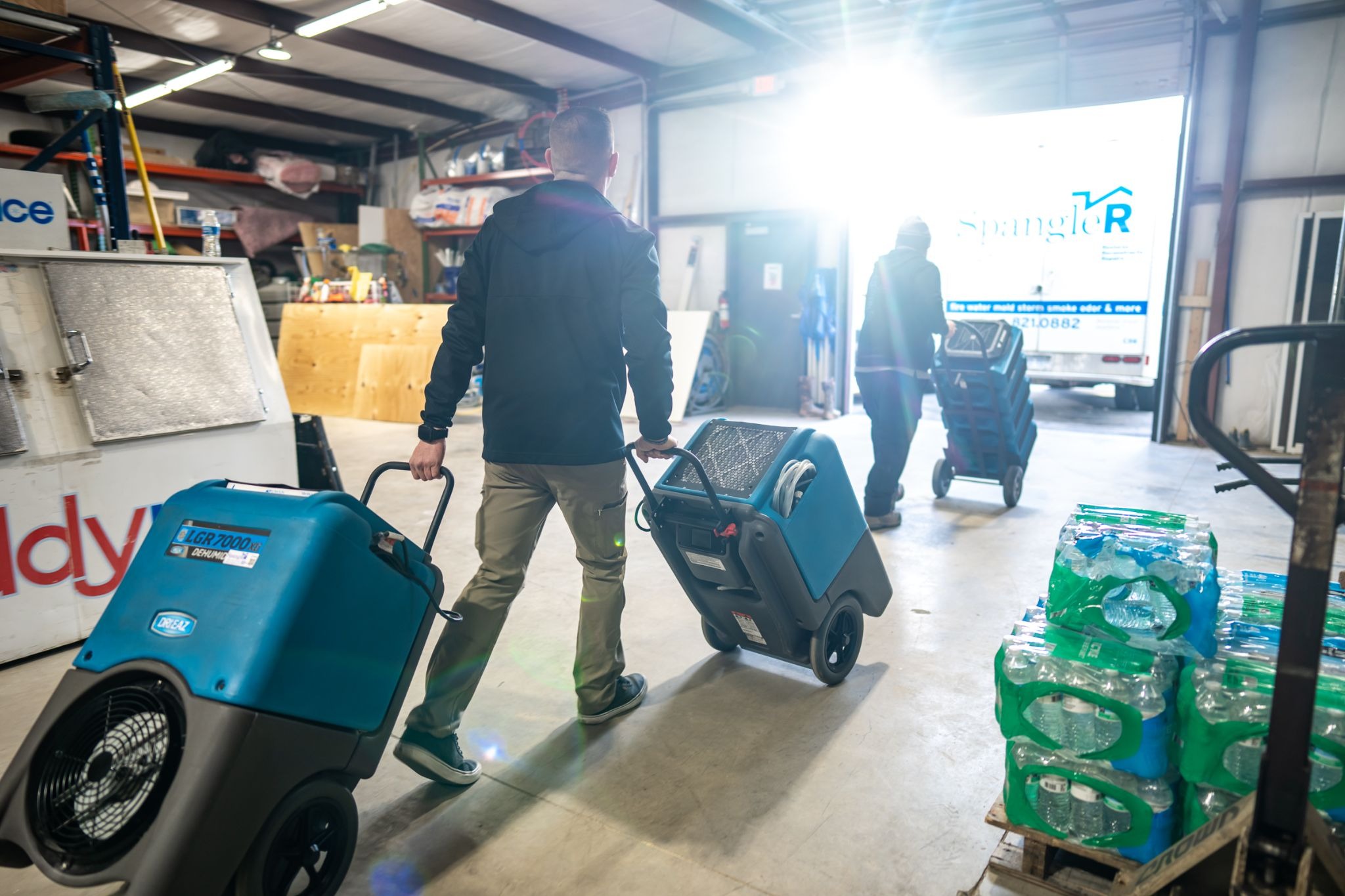
Professional water extraction and structural drying rely on moisture meters and thermal imaging when needed to find saturation that is not visible to the eye. Commercial-grade air movers and dehumidifiers are placed strategically, and moisture levels are monitored daily until materials return to normal, pre-storm conditions.
Skipping or rushing this step is one of the most common reasons a storm-related water loss turns into a mold remediation project weeks later, and that is almost always more disruptive and more costly than addressing the moisture the first time.
When to Call a Professional for Storm Damage Repair in Charlotte, NC
Not every storm requires a professional response. A few missing shingles or minor yard debris might be something a property owner can manage directly. A few signs, though, point toward bringing in a professional restoration team.
Call for professional storm damage repair in Charlotte, NC, if you notice water stains spreading across a ceiling or wall, standing water inside the building, a damaged or compromised roof section, or any structural movement. The same applies if multiple systems were affected at once, such as roofing, windows, and flooding together, since that kind of combined damage is harder to assess and dry correctly without the right equipment.
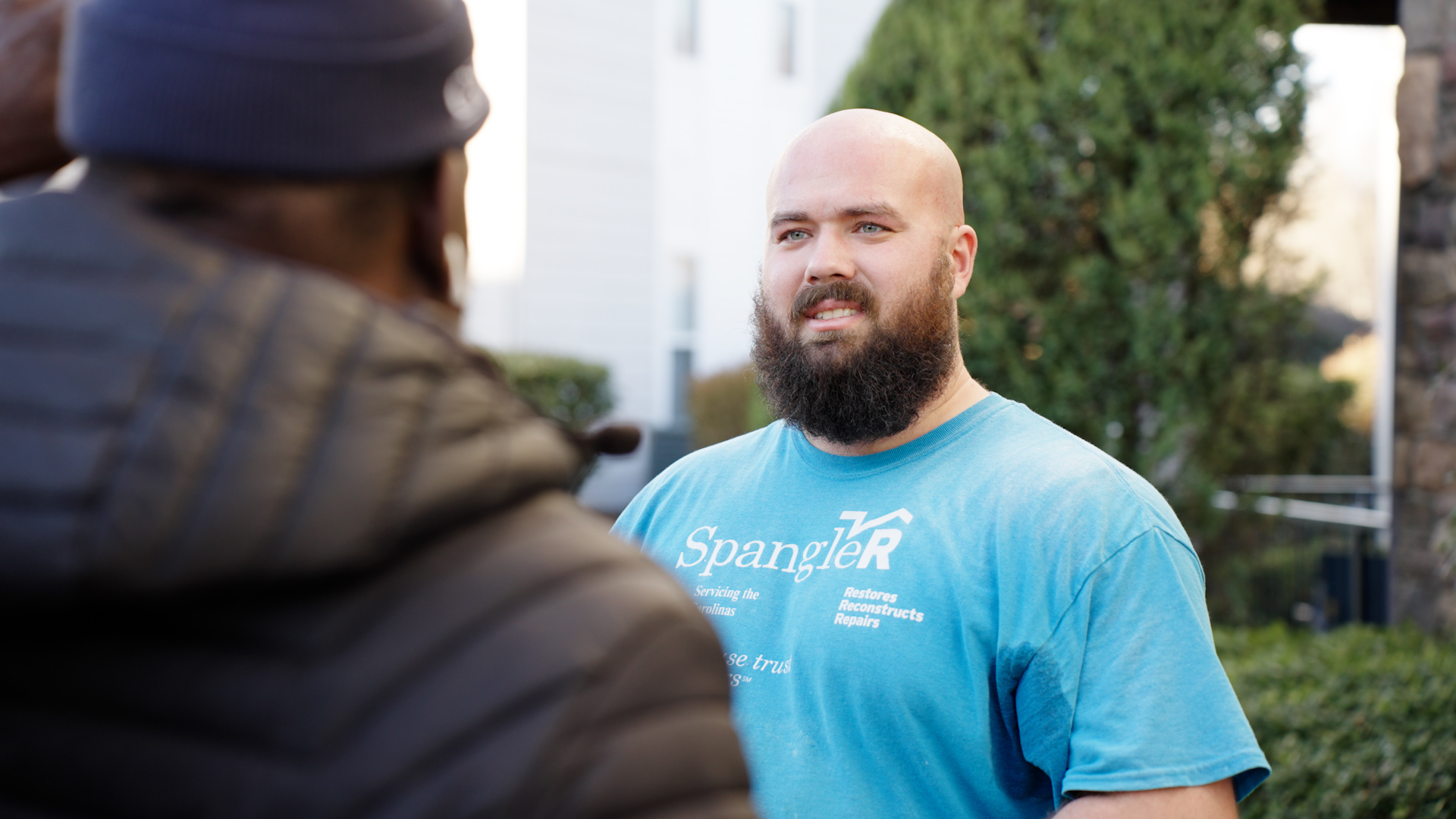
Spangler Restoration provides 24/7 emergency response across the Charlotte area and the broader Carolinas, with IICRC-trained and certified technicians who handle water extraction, structural drying, and mold prevention as part of the same visit. Spangler also holds NC/SC Licensed General Contractor status with Unlimited Status, which means storm-related mitigation and structural repairs, from board-up and tarping to a full roof or wall rebuild, can be managed by a single, accountable team rather than split across separate contractors.
Throughout the process, Spangler documents moisture readings, damage scope, and job progress and can meet onsite with adjusters to explain the work being performed. That documentation supports the insurance review without stepping into the role of a public adjuster or attorney, since restoration companies in North Carolina and South Carolina are not permitted to negotiate or settle a claim on a policyholder’s behalf.
Questions to Ask Before Hiring a Storm Damage Repair Team
If you are choosing a restoration partner for the first time or comparing options after a storm, a few questions can help you evaluate them quickly.
- How soon can your team respond, and what happens during high-demand periods after a regional storm?
- Are your technicians IICRC-trained, and do you handle both water mitigation and structural repairs?
- What documentation do you provide for insurance, and can you meet onsite with an adjuster?
- Have you worked on properties similar to mine, whether residential, multifamily, or commercial?
A provider who can answer these clearly, without vague promises or pressure, is generally a good sign that they are set up to handle the job.
Bringing It All Together
Charlotte’s summer thunderstorms are not going away, and they rarely give much warning before they arrive. The property owners who come through them with the least disruption are usually the ones who know what to check first, document damage carefully, and know who to call before the next storm rolls in.
If a recent storm has left your home or business with roof damage, water intrusion, or storm debris, do not wait for small problems to become larger ones. Contact Spangler Restoration for fast, professional storm damage repair in Charlotte, NC, available 24 hours a day, seven days a week. Because trust matters, especially after a storm.
Call 704-821-0882 in Charlotte or get in touch with our team to get help restoring your property and your peace of mind.
You Might Also Like

Trauma and Biohazard Cleanup Regulations: What Every Property Manager and Restoration Partner Should Know
Top Restoration Trends Facilities Teams Need to Watch